
Did you know that as of October 6, 2026, federal regulations mandate that almost all new gas storage units must hit a 95% thermal-efficiency threshold? If you’re planning a commercial water heater installation san diego, the landscape of compliance has changed significantly. We understand the pressure of keeping a business running while trying to decode California Title 24 energy requirements and the impact of San Diego’s hard water on your equipment. It’s a lot to manage, especially when you need a solution that balances upfront costs with long-term reliability.
We’ve designed this guide to help you move from confusion to confidence. You’ll learn how to navigate the local permit process, including the $114.66 “No-Plan” fee, and why condensing technology is now the standard for your property. We’ll also show you how a methodical approach ensures a zero-downtime installation that protects your bottom line. By the end, you’ll know exactly how to secure a code-compliant system that lowers your monthly utility bills and provides the peace of mind that comes with our transparent, flat-rate pricing model.
Key Takeaways
- Understand how the 2026 federal mandates and California Title 24 standards require a shift toward high-efficiency condensing technology for your commercial property.
- Identify the specific impact of San Diego’s hard water on heating elements and why proactive maintenance is essential to prevent premature equipment failure.
- Compare the high-recovery rates of traditional storage tanks with the space-saving efficiency of tankless systems to find the right fit for your business demand.
- Navigate the logistics of a commercial water heater installation san diego, including the “no-plan” permit process and mandatory seismic strapping requirements.
- Learn why a “drain-first” installation strategy protects your building’s infrastructure by preventing heavy sediment from impacting your main sewer lines.
The High Stakes of Commercial Water Heating in San Diego
Hot water is the lifeblood of your business operations. While a residential unit might handle a few showers and a load of laundry, a professional environment demands a much higher performance level. For a successful commercial water heater installation san diego property owners must prioritize recovery rates over simple tank capacity. Recovery rate refers to how quickly a heater can raise the temperature of incoming cold water to a usable level. If your recovery rate lags behind your peak demand, your business stops. For a San Diego restaurant, a lack of hot water isn’t just an inconvenience; it’s a code violation that can lead to an immediate health department shutdown.
There’s also a direct link between your water temperature and the health of your building’s pipes. Hot water helps keep fats, oils, and grease in a liquid state as they move toward the sewer. When temperatures drop, these substances solidify, leading to expensive blockages. We often find that drainage issues are actually symptoms of an underperforming or failing water heater. Maintaining the right temperature protects your entire infrastructure.
Commercial Capacity Requirements for San Diego Businesses
Calculating your peak hour demand is the first step in our process. A multi-family housing complex requires a steady flow for morning showers, whereas a food service establishment needs intense bursts of high-heat water for dishwashing. We focus on BTU (British Thermal Unit) input because it dictates how fast your system works. While Tankless water heaters offer high efficiency and endless flow for specific applications, many high-demand San Diego environments still rely on large storage tanks to bridge the gap during extreme peak usage hours. Our goal is to ensure you never run cold when your customers or tenants need hot water most.
Local Environmental Factors: Hard Water and Salt Air
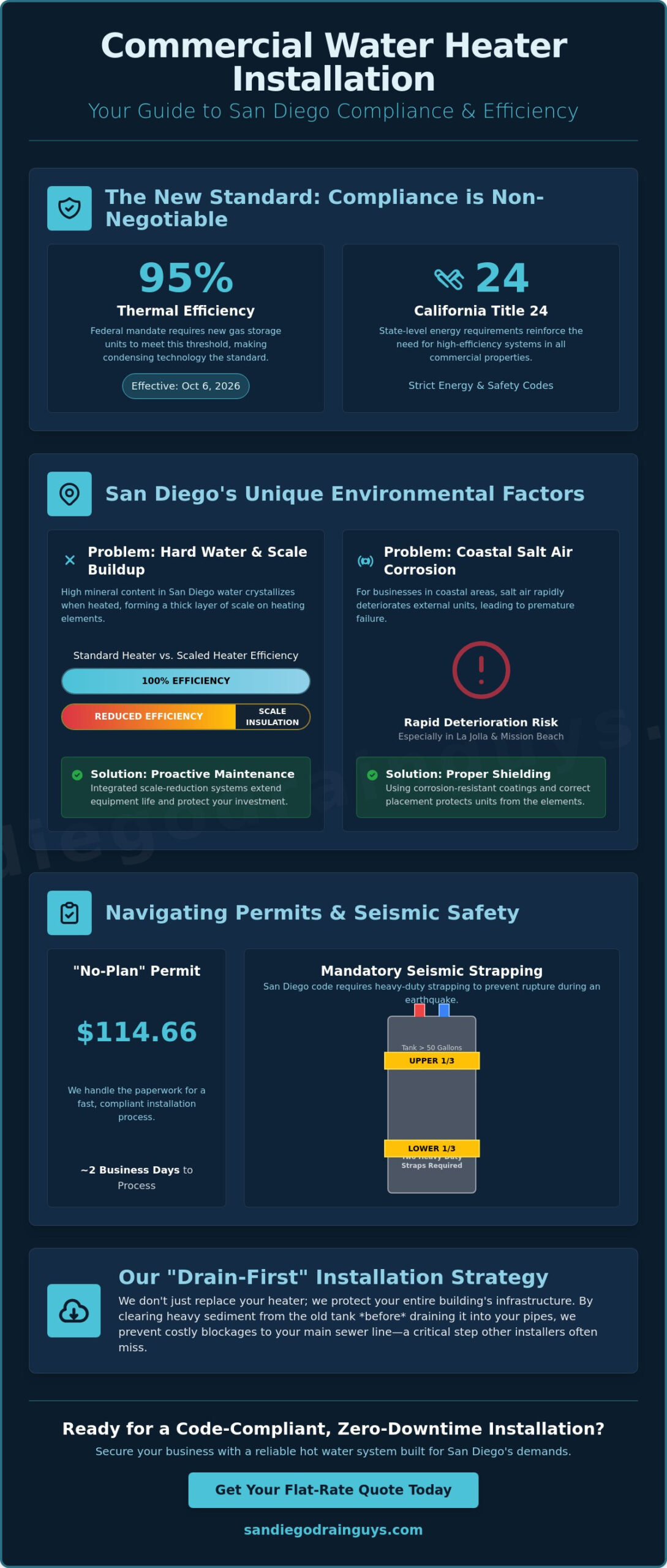
San Diego’s water supply is known for its high mineral content. These minerals crystallize when heated, creating a thick layer of scale at the bottom of your tank or inside the heat exchanger. This sediment acts as an insulator; it forces your burner to work harder and eventually causes the metal to fatigue and leak. This is the primary reason commercial units in our area often fail years before their rated lifespan.
For businesses in coastal areas like La Jolla or Mission Beach, salt air corrosion is another major factor. We see external units deteriorate rapidly if they aren’t properly shielded or treated with corrosion-resistant coatings. When we handle a commercial water heater installation san diego businesses often opt for integrated scale-reduction systems. This proactive step extends the life of your equipment and protects your investment from the unique challenges of our local environment.
Navigating San Diego Codes & Title 24 Compliance
Compliance isn’t just about avoiding fines; it’s about protecting your property’s value and ensuring occupant safety. When we perform a commercial water heater installation san diego, we handle the technical paperwork so you don’t have to. The City of San Diego utilizes an online portal for “No-Plan” permits, which typically take about two business days to process. As of May 2025, the fee for this permit is $114.66. This process is essential because it triggers a professional inspection to verify that your new system meets the San Diego Municipal Code for plumbing standards.
We also prioritize thermal expansion protection during every setup. When water heats up, it expands, creating pressure in a closed commercial system. Without a properly sized expansion tank and a calibrated thermal expansion relief valve, this pressure can damage your fixtures or lead to a premature tank rupture. We ensure these safety components are integrated correctly from day one to prevent long-term stress on your building’s plumbing infrastructure.
Seismic Safety and Structural Compliance
Earthquakes are a constant reality in Southern California. San Diego requires specific seismic strapping for all water heaters to prevent them from tipping and severing gas or water lines during a tremor. For tanks over 50 gallons, San Diego seismic code requires at least two heavy-duty straps, with one located in the upper one-third and another in the lower one-third of the unit. Vertical units need floor anchoring that matches manufacturer specifications for high-seismic zones, while horizontal units require specialized cradles and bracing. These measures are non-negotiable for passing city inspections and protecting your business investment.
Energy Efficiency and Ultra-Low NOx Requirements
The regulatory environment is shifting rapidly toward sustainability. As of October 6, 2026, new federal rules mandate that most commercial gas water heaters must use condensing technology. This means units must reach at least 95% thermal efficiency for storage models and 96% for instantaneous systems. These high-efficiency models capture heat from exhaust gases that traditional heaters simply waste. Additionally, the San Diego Air Pollution Control District enforces strict Ultra-Low NOx emission standards to improve local air quality. Modern units that meet these benchmarks can reduce your operational costs by up to 30% compared to legacy models. If you’re concerned about how these codes affect your current setup, our team can provide a professional plumbing assessment to ensure you stay ahead of 2026 requirements.
Choosing the Right System: Tank vs. Tankless for Your Business
Selecting the right system depends entirely on your specific hot water demand and the physical constraints of your property. We see many business owners struggle between the familiarity of a tank and the modern efficiency of tankless. It’s a strategic choice. A hotel in the Gaslamp Quarter has vastly different needs than a boutique coffee shop in North Park. We help you evaluate your 10-year ROI by looking past the initial purchase price and focusing on fuel costs, maintenance schedules, and the risk of business downtime. We want you to have a system that works so well you forget it’s even there.
When to Choose Commercial Tankless
Tankless systems are excellent for businesses with limited square footage. Downtown commercial leases are expensive; you don’t want to waste fifty square feet on a massive boiler if you don’t have to. These units provide endless hot water, which is perfect for high-turnover food service operations that can’t afford to wait for a tank to recover. However, retrofitting for tankless isn’t always a “plug-and-play” scenario. These units often require larger gas lines to handle the high BTU input and specific stainless steel venting that legacy buildings don’t have. We carefully assess your existing infrastructure first to avoid expensive surprises during your commercial water heater installation san diego project. We don’t want you to find out mid-install that your gas meter needs a costly upgrade.
The Case for High-Efficiency Storage Tanks
High-efficiency storage tanks remain the reliable choice for high-occupancy multi-family buildings across the county. When hundreds of tenants expect hot water simultaneously at 7:00 AM, a large reserve is often more practical than a complex rack of multiple tankless units. These systems generally have lower maintenance complexity, which is a major factor for property managers who want to minimize service calls. Modern storage units now feature advanced insulation that keeps standby heat loss to a minimum, ensuring they meet the latest DOE energy efficiency standards. We also look at the internal lining of these tanks. Glass-lined or stainless steel options are better suited for San Diego’s aggressive water chemistry, preventing the sediment issues we discussed earlier.
Hybrid systems are also gaining traction in the local market. They combine a small storage buffer with a high-efficiency heating element. This setup handles sudden spikes in demand without the massive footprint of a traditional boiler. While the upfront investment for high-efficiency or tankless systems is higher, the savings in monthly utility bills usually justify the cost. We provide transparent, flat-rate pricing for every commercial water heater installation san diego we perform. This ensures you understand the full scope of the project before we start. We want you to feel confident that your new system will deliver reliable hot water for years to come.
The Installation Process: Minimizing Downtime for SD Businesses
Every hour your business spends without hot water is an hour of lost revenue. Our approach to commercial water heater installation san diego focuses on meticulous planning to ensure a seamless transition. We start with a comprehensive site audit to identify potential hurdles before they become emergencies. This includes verifying gas line capacity and venting paths, but also checking the drainage infrastructure. Modern condensing units produce acidic condensate that requires proper neutralization and disposal to prevent pipe damage. We also look for existing corrosion in your supply lines that might compromise a new, high-pressure system.
The physical reality of commercial work often involves moving units weighing over 500 pounds through tight hallways or cramped basements. We use specialized equipment and a disciplined methodology to remove your old equipment without damaging your property. Throughout the process, we maintain a localized, privacy-first workspace. This ensures our presence doesn’t disrupt your customers or staff. If your operation requires continuous hot water, we can often implement temporary bypass solutions to keep your doors open while the swap occurs.
Once the new unit is in place, we move into final testing and commissioning. We verify that flow rates meet your building’s specific peak demand requirements and that all safety valves are fully operational. If you are ready to upgrade your facility’s efficiency, you can schedule a commercial water heater installation with our expert team today.
Pre-Install: The San Diego Drain Guys Site Audit
Our site audit goes beyond the water heater itself. We inspect the surrounding plumbing for signs of mineral scaling or electrolytic corrosion. Since we are drainage experts, we pay close attention to where your system discharges. Condensing models require a dedicated drain line with a neutralizer kit to protect your building’s main sewer lines from acidic runoff. This attention to detail prevents future plumbing failures that others might overlook.
Post-Install: Maintenance for Longevity
Installing the unit is only the first step. To protect your investment against San Diego’s mineral-heavy water, we recommend a standardized maintenance schedule. The 2026 standard for high-efficiency units includes annual flushing to remove sediment buildup. We also prioritize anode rod inspections. Replacing a depleted anode rod is the single most effective way to double the life of a commercial tank. Finally, we train your facility staff on emergency shut-off procedures, so they feel confident and capable in the unlikely event of a system issue.
Why San Diego Drain Guys is the Strategic Choice
We believe a water heater is more than a standalone appliance; it’s a critical component of your building’s broader infrastructure. When you partner with us for a commercial water heater installation san diego, you receive an integrated approach that prioritizes the longevity of your entire system. We align our specialized installation skills with comprehensive professional plumbing services in San Diego to ensure your facility remains operational. Our team operates with a “calm expert” persona. We know that equipment failure is stressful for any business owner. We’re here to provide reliable solutions that eliminate that anxiety through clear communication and methodical execution.
Transparency is the cornerstone of our brand. We utilize a specific, flat-rate pricing model that serves as a shorthand for honesty. You won’t face hidden fees or unexpected surcharges halfway through the project. We respect your commercial budget and provide the exact cost upfront. As a locally owned entity, we have deep roots in the community. We understand the unique pressures placed on San Diego County infrastructure, from coastal corrosion to the mineral content in our local water supply. This local expertise allows us to recommend the best systems for our specific environment.
The Drainage Connection
Our “Drain-First” philosophy is a direct response to the challenges we’ve seen in local commercial properties. As we’ve noted, the sediment produced by San Diego’s hard water doesn’t just stay in the tank. Over time, this scale can migrate into your building’s main lines, causing significant downstream clogs. These blockages often require intensive hydro jetting services in San Diego to restore flow. By choosing a plumber who understands the complexities of drainage, you protect your sewer lines from commercial-scale buildup. We ensure that your commercial water heater installation san diego includes proper filtration and drainage management to keep your pipes clear for years to come.
Reliability and Transparency
We aim to exceed standard service levels in every interaction. This commitment starts with our disciplined installation process and ends with a meticulous job-site cleanup. We respect your professional environment and work with a high degree of privacy and empathy. We don’t consider a job finished until the area is spotless and your team feels confident in the new system’s operation. Our goal is to move you from a state of concern to a state of informed confidence. If you’re ready for a code-compliant upgrade that protects your bottom line, Contact San Diego Drain Guys today for a professional consultation.
Secure Your Business Infrastructure for 2026 and Beyond
Success in the San Diego commercial landscape requires a proactive approach to facility management. We’ve explored how 2026 federal mandates and California Title 24 standards have transformed the requirements for hot water systems. Choosing the right high-efficiency unit is about more than just compliance; it’s a strategic investment in your property’s long-term ROI. By prioritizing recovery rates and integrating scale-reduction technology, you protect your building from the aggressive mineral content found in our local water supply.
While you focus on essential utilities, don’t overlook safety markings in your storage or production areas; to ensure your facility remains organized and compliant, you can visit StripeGuys for specialized floor striping solutions.
When you are ready to move forward with a commercial water heater installation san diego, our team provides the specialized expertise you need. As Licensed C-36 Plumbing Experts, we understand the nuances of San Diego commercial codes and the “No-Plan” permit process. We operate with a commitment to flat-rate transparent pricing; you won’t have to worry about financial surprises during a critical upgrade. We’re here to ensure your business stays operational with reliable, high-performance hot water. Get a Transparent Quote for Your Commercial Installation today and gain the peace of mind that comes from professional, local service.
Frequently Asked Questions
Do I need a permit for a commercial water heater replacement in San Diego?
Yes, you must have a permit for every commercial water heater installation in the City of San Diego. We typically apply for a “No-Plan” permit through the city services portal, which usually takes about two business days to process. This permit is essential because it triggers the professional inspection required to verify that your system meets the current California Plumbing Code and local safety standards.
How long does a typical commercial water heater installation take?
A standard installation generally takes between four to eight hours to complete. Complex projects involving 500lb units in cramped basements or multi-unit tankless racks can take longer. We prioritize pre-installation audits to identify logistical hurdles early. This allows us to work efficiently and often implement temporary hot water bypasses so your business doesn’t have to close during the swap.
What is the difference between residential and commercial water heaters?
The primary differences are recovery rates and BTU input capacity. Commercial units are engineered to handle continuous, high-volume demand and have much faster recovery times than residential models. While a residential tank might only heat 40 gallons an hour, a commercial unit can handle hundreds of gallons to meet the peak hour needs of San Diego hotels, gyms, or restaurants.
How does San Diego hard water affect my commercial warranty?
San Diego’s mineral-heavy water can void your equipment warranty if you don’t follow the manufacturer’s required maintenance schedule. Mineral scale causes the tank to overheat and fail prematurely. Most manufacturers require documented annual flushing and anode rod inspections to keep the warranty active in regions with high mineral content. We help you stay compliant by providing these standardized maintenance steps.
Can I switch from a tank to a tankless system in my commercial building?
Yes, you can switch, but it requires a careful assessment of your building’s infrastructure. Commercial tankless units often need larger gas lines and specialized venting that differs from traditional storage tanks. We evaluate your gas meter and exhaust paths during our site audit to ensure your commercial water heater installation san diego is feasible without requiring excessive or costly structural changes to your property.
What are the seismic strapping requirements for San Diego commercial properties?
San Diego code requires all water heaters to be anchored and strapped to resist movement during an earthquake. For commercial tanks over 50 gallons, you must install at least two heavy-duty straps. One strap must be in the top third of the unit and the other in the bottom third. Both must be secured firmly into the wall studs or the building’s structural frame to pass inspection.
How often should a commercial water heater be serviced in Southern California?
We recommend servicing your commercial water heater at least once every twelve months. Because of the hard water issues in our region, annual flushing and an inspection of the internal lining are vital. High-demand environments like laundromats or large apartment complexes might even require bi-annual service to prevent heavy sediment from clogging your building’s main drainage lines or reducing system efficiency.
What happens if my commercial water heater is not Title 24 compliant?
If your system isn’t Title 24 compliant, you won’t pass the mandatory city inspection required after a commercial water heater installation san diego. This can lead to fines and may complicate your business insurance coverage or future property appraisals. Non-compliant equipment also results in significantly higher monthly utility bills because you’re missing out on the energy-saving benefits of modern condensing technology and superior insulation.