
Most homeowners treat their kitchen sink like a secondary trash can, but your garbage disposal was never designed to be a catch-all for leftovers. It is a precision tool meant for small food scraps, not a heavy-duty industrial shredder. We understand the frustration and immediate anxiety that comes with a sudden clog or a foul odor rising from the drain. These issues often happen at the worst times, leading to worries about expensive repairs or even a main sewer line backup. To keep your kitchen running smoothly, you must understand exactly what not to put in a garbage disposal to prevent systemic pipe failure.
We believe in providing our neighbors with the transparency and expertise needed to maintain a healthy home. You deserve a kitchen that functions without surprises. In this 2026 guide, we promise to show you how to protect your plumbing using proven advice from San Diego’s drain specialists. We will walk through the specific items that destroy your pipes, explain why certain foods are actually hidden dangers, and give you the tools to ensure your sink remains clear and odor-free for years to come.
Article at a Glance
- Learn why your disposal relies on centrifugal force and blunt lugs rather than sharp blades to process food waste safely.
- Discover exactly what not to put in a garbage disposal to avoid the “plumbing hair” effect caused by fibrous vegetables and starchy pastes.
- Understand the danger of FOGs and how cooling grease creates solidified blockages deep within your sewer pipes.
- Adopt proactive habits like the “Cold Water First” rule to keep your kitchen functional and odor-free.
- Identify the warning signs of a jammed motor or a failing seal so you know when to call for professional repair.
Understanding How Your Garbage Disposal Actually Works
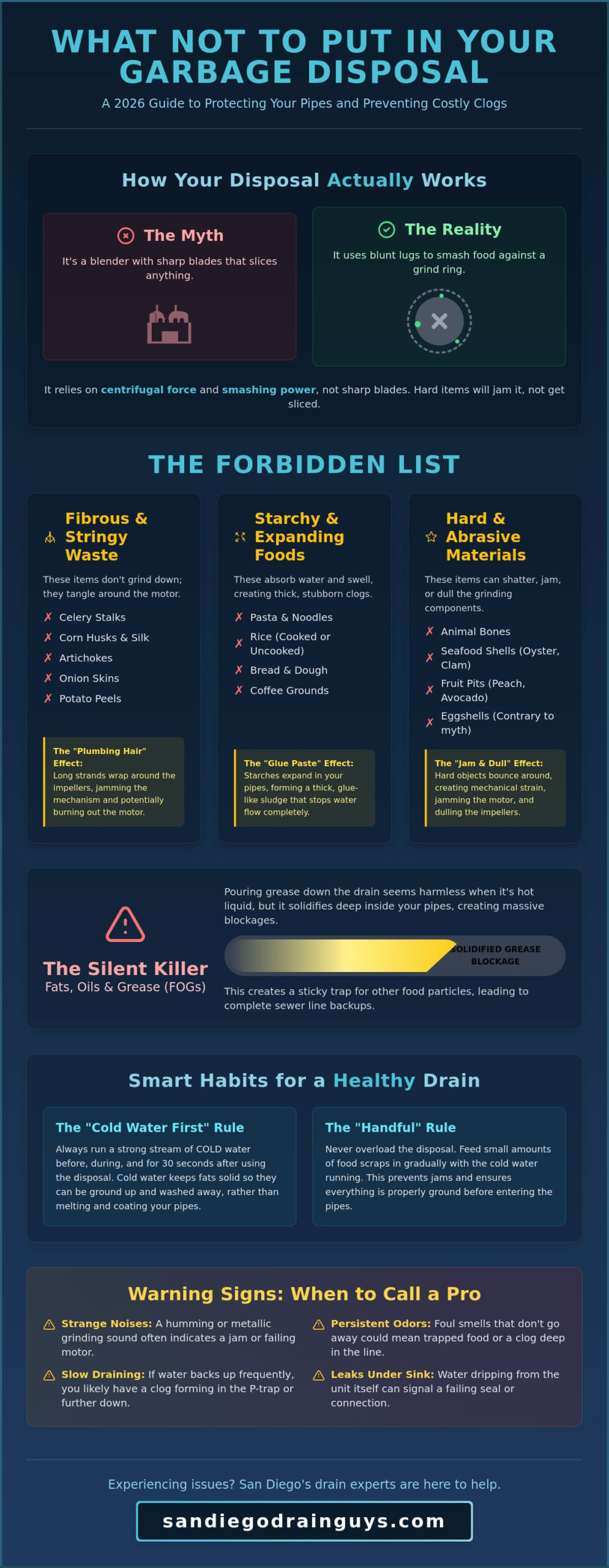
A garbage disposal is a motorized kitchen appliance that shreds organic waste into pieces small enough to pass safely through your home’s plumbing. Many homeowners assume the unit works like a blender, but the internal mechanics are actually much more specific. Instead of using sharp knives to slice through food, the unit relies on centrifugal force to push food scraps against a stationary grind ring. This mechanical process represents the very beginning of a complex drainage path that must remain clear to prevent backups. Understanding the mechanics of the unit is the first step in identifying what not to put in a garbage disposal to ensure long-term reliability.
The Impeller vs. Blade Misconception
Most disposals don’t actually have sharp blades, despite what popular belief suggests. Instead, they feature blunt metal “impellers” or lugs mounted on a spinning plate. These lugs function more like hammers, smashing food particles against an abrasive ring until they are liquefied. When you understand how a garbage disposal works, it becomes clear why thinking you have blades leads to trouble. If you assume the unit can cut through anything, you might be tempted to toss in hard objects like fruit pits or small bones. These items don’t get sliced; they bounce around, jam the impellers, and cause significant mechanical strain. Learning what not to put in a garbage disposal starts with respecting these blunt components and the limits of their grinding power.
Why Your Sink Drain is Not a Trash Can
The “out of sight, out of mind” fallacy is a leading cause of plumbing failure in San Diego. Your disposal is only the first six inches of a drainage path that can extend 50 feet or more through your home. We often see situations where the appliance clears the waste successfully, but the P-trap or the pipes downstream become completely choked. The disposal’s job is to prep the waste, but the water flow’s job is to transport it. Without enough water, ground-up waste settles in the pipes and creates a thick sludge that eventually stops all flow. We encourage you to view the disposal as a tool for cleaning up small remnants, not a shortcut for disposing of whole meals. Treating your sink like a trash can puts unnecessary pressure on your entire sewer line, leading to the very clogs and odors we aim to help you avoid.
The Forbidden List: What Not to Put in a Garbage Disposal
Protecting your home’s plumbing requires a clear understanding of what not to put in a garbage disposal. While these units are durable, they have specific mechanical and biological enemies that can lead to a complete system failure. We often see homeowners making the mistake of treating the disposal like a high-powered blender. This leads to cumulative build-ups that eventually require professional intervention. One of the most important habits to adopt is the “handful rule.” You should never feed the disposal more than a small amount of waste at once. Even if an item is technically grindable, a large volume can overwhelm the impellers and cause a backup in the P-trap.
Fibrous and Stringy Waste
Fibrous vegetables like celery, corn husks, and artichokes act like “plumbing hair” inside your drain. These long, tough strands don’t always get pulverized by the grind ring. Instead, they wrap around the spinning components and tangle the mechanism, which can burn out the motor. Onion skins present a unique danger because they are thin and translucent. They can pass through the grinding process whole and create a waterproof seal over the holes in the grind ring. Potato peels are a double threat; they are fibrous enough to tangle and starchy enough to form a thick, glue-like paste that stops water flow entirely.
Starchy and Expanding Foods
Pasta, rice, and bread are some of the most common culprits behind kitchen sink clogs. These foods are designed to absorb liquid. Even after they pass through the disposal, they continue to expand as they sit in your pipes. When these expanding starches combine with the dangers of FOGs (fats, oils, and grease), they create a heavy sludge that is difficult to clear without specialized equipment. Coffee grounds are another frequent offender. They don’t float; they settle in the low spots of your plumbing, eventually building up into a sediment that acts like wet sand in your pipes.
Hard and Abrasive Materials
Hard materials can shatter or dull the internal components of your unit. You should avoid putting animal bones, seafood shells, or fruit pits like those from peaches or avocados down the drain. While some people believe eggshells help sharpen the “blades,” we know this is a myth. Eggshells have a thin, sticky membrane that can wrap around the impellers or catch other food debris. If your sink is already draining slowly due to these materials, we recommend scheduling a professional garbage disposal repair to prevent a more serious main line blockage.
The Silent Killers: FOGs and Chemical Cleaners
Fats, Oils, and Grease, commonly known as FOGs, represent the most significant threat to the long-term health of your kitchen plumbing. In San Diego, these substances are the primary cause of major sewer backups and localized kitchen clogs. Many homeowners mistakenly believe that if a substance is liquid when it leaves the pan, it will remain liquid throughout the drainage system. This misunderstanding is a leading reason why people struggle with what not to put in a garbage disposal. Whether it is bacon grease, butter, or even liquid salad dressings, these substances behave differently once they enter your cool pipes.
The Chemistry of a Fatberg
When hot grease enters your drain, it quickly loses heat and begins to solidify. As it cools, it clings to the walls of your pipes, creating a sticky, waxy lining. This lining acts like a magnet for every other food particle passing through the system. Over time, these layers of grease and debris grow into “fatbergs,” which are massive, rock-hard blockages that can completely seal off a sewer line. Aside from the physical blockage, rotting grease inside a disposal creates a persistent, foul odor that is notoriously difficult to eliminate. Instead of reaching for the grease jar, we recommend using natural alternatives like baking soda and vinegar to keep your unit fresh without compromising your pipes.
Chemical Cleaners vs. Mechanical Integrity
Store-bought chemical drain cleaners are often the first thing people grab when a sink slows down, but these products are incredibly destructive to your disposal’s internal components. The caustic chemicals found in these bottles are designed to eat through organic matter, but they don’t stop there. They also eat through the rubber seals, plastic mounting rings, and specialized gaskets that keep your unit watertight. Chemical cleaners often settle in the disposal chamber, causing long-term corrosion that leads to premature motor failure and leaks. We also want you to consider the safety risk; if you turn on a disposal that contains caustic chemicals, any resulting splash could cause serious injury to your skin or eyes. Understanding what not to put in a garbage disposal includes recognizing that harsh chemicals are just as dangerous as the wrong food items.
We see the damage caused by these silent killers every day. If you are dealing with a stubborn clog that won’t budge, it is much safer to rely on professional hydro jetting to clear the line. This method uses high-pressure water to scrub the grease from your pipe walls without the use of corrosive acids, protecting both your appliance and your domestic environment.
Proactive Maintenance for a Healthy San Diego Kitchen
Knowing what not to put in a garbage disposal is only half the battle. Your operational habits are what truly protect your pipes from a main sewer line backup. We believe that a few simple adjustments to your daily routine can prevent the need for emergency plumbing visits. Consistency is the key to maintaining a functional, odor-free kitchen sink. Even if you are diligent about keeping forbidden items out of the drain, using the unit incorrectly can still lead to long-term pipe damage and cumulative build-ups.
The Proper Way to Run Your Disposal
We follow a standardized four-step process to ensure the unit clears waste effectively without straining the motor or clogging the P-trap. Following this sequence every time you use the appliance will significantly extend its lifespan.
- Step 1: Start the cold water at a high flow rate. We use cold water because it keeps any remaining fats or oils in a solid state so they can be ground up and flushed away rather than melting and coating the pipe walls.
- Step 2: Turn on the disposal before adding any food scraps. This allows the impellers to reach full speed before they encounter any resistance.
- Step 3: Feed your scraps slowly, one handful at a time. Overloading the chamber is a primary cause of motor jams and mechanical strain.
- Step 4: Let the water run for 15 to 30 seconds after you turn the unit off. This extra flush ensures that all ground-up waste reaches the larger sewer pipes rather than settling in the low spots of your plumbing.
Cleaning and Deodorizing Safely
You don’t need harsh, caustic chemicals to keep your disposal fresh. We recommend dropping a handful of ice cubes and a tablespoon of rock salt into the unit once a month. As the disposal grinds the ice, the salt acts as an abrasive that scrubs the grind ring and removes built-up sludge from the lugs. For a fresh scent, you can grind a few small pieces of lemon or orange peel, but use these in moderation to avoid the fiber issues we discussed earlier. A classic mixture of baking soda and vinegar is also a safe, bubbling way to refresh the drain without damaging the rubber seals or plastic components.
Take a moment once a week to look under your sink for any signs of moisture or pooling water. Small drips often signal a failing flange or a loose mounting ring that needs attention. If you notice persistent leaks or if the unit begins to make a loud metallic clanging sound, it is time to act. You can schedule a professional garbage disposal repair with our team to address these issues before they turn into a major kitchen flood.
When to Call a Professional for Garbage Disposal Repair
Even if you are diligent about what not to put in a garbage disposal, mechanical components eventually wear down or encounter unexpected failures. Recognizing the warning signs early can save you from a major kitchen flood or a complete motor burnout. One of the most common indicators of trouble is a low humming sound when you flip the switch. This usually means the motor is receiving power but the impellers are jammed. If you hear this, turn the unit off immediately. Continuing to provide power to a jammed motor will cause it to overheat and fail permanently.
Persistent leaks under the sink are another red flag that requires professional attention. These drips often originate from a failed sink flange or a degraded rubber seal where the unit connects to the drainage pipe. While it might seem like a minor nuisance, moisture in your cabinet leads to mold and structural damage. If you notice slow drainage that persists even after the disposal chamber is empty, the issue likely sits further down the line. We strongly advise against “poking” into the disposal with metal tongs or screwdrivers. This is dangerous for you and can easily damage the precision-balanced lugs inside the unit.
San Diego Specific Challenges: Hard Water and Roots
Homeowners in our community face unique environmental factors that impact plumbing longevity. San Diego’s hard water contains high mineral levels that can cause scale buildup inside the disposal chamber, making the grind ring less effective over time. A kitchen sink backup isn’t always an appliance issue. In many local neighborhoods, invasive tree roots can infiltrate the main sewer line, causing a systemic blockage that manifests at your lowest drain point. If we determine that your pipes have structural damage from roots or age, we may recommend trenchless sewer repair San Diego to restore your system without digging up your yard.
Professional Solutions: Beyond the Plunger
When a simple plunger isn’t enough, we provide advanced diagnostic and cleaning services to get your kitchen back in order. Our team uses specialized tools for professional drain cleaning in San Diego to clear stubborn obstructions that DIY methods can’t reach. For pipes heavily coated in the fats and oils we discussed earlier, we utilize hydro jetting services San Diego. This process uses high-pressure water to scrub the interior of your pipes clean, removing the “fatbergs” that lead to recurring clogs. When you call San Diego Drain Guys, you can expect a methodical inspection, transparent pricing, and a commitment to respecting your personal environment while we solve the problem.
Protect Your Home with Smarter Kitchen Habits
Your garbage disposal is a precision tool designed for small food remnants, not a heavy-duty shredder. By mastering the cold water flush and strictly following the list of what not to put in a garbage disposal, you can avoid the stress of a sudden sink backup. Remember that liquid grease and starchy foods are the silent enemies of your pipes, often causing clogs far beyond the appliance itself. We want you to have the peace of mind that comes with a functional, reliable kitchen.
If your sink’s backed up or your disposal’s acting up, we are here to help. We are locally owned and operated in San Diego, specializing in advanced solutions like hydro jetting and trenchless repair. Our team provides transparent, flat-rate pricing for all homeowners, so you never have to worry about hidden surprises or unexpected fees. Book your flat-rate drain service with San Diego Drain Guys today!
You don’t have to navigate plumbing issues alone. We are your dependable partners in keeping your home’s infrastructure healthy and your kitchen running smoothly for years to come.
Common Questions About Garbage Disposal Care
Can I put coffee grounds down the garbage disposal?
No, you should never put coffee grounds down the disposal. While they seem harmless, they don’t float and won’t flush through your pipes easily. Instead, they settle in the low spots of your plumbing, creating a dense, sludge-like sediment. Over time, this buildup acts like wet sand in your pipes, leading to a major blockage. It is much safer to dispose of grounds in your City-provided gray container for trash collection.
How do I unjam a garbage disposal safely?
To safely unjam your unit, start by turning off the power at the main breaker. Most disposals have a hex hole at the very bottom of the motor. Insert an Allen wrench into this hole and rotate it back and forth to manually break the jam. Once the impellers move freely, you can restore power and press the small red reset button located on the bottom of the unit to restore normal operation.
Is it okay to put eggshells in the disposal to sharpen the blades?
No, eggshells do not sharpen the “blades” of your disposal. As we discussed, disposals use blunt lugs rather than sharp knives. The thin, sticky membrane inside an eggshell is actually quite dangerous for your plumbing. These membranes can wrap around the spinning components or catch other debris, contributing to the list of what not to put in a garbage disposal to avoid recurring clogs and mechanical strain on the motor.
What should I do if my garbage disposal is humming but not spinning?
If your unit is humming but not spinning, it means the motor is jammed and trying to work. You must turn the unit off immediately to prevent the motor from burning out. This is usually caused by a hard object, like a fruit pit or a small bone, getting wedged between the impeller and the grind ring. Once the power is off, you can attempt the manual Allen wrench method to free the obstruction before resetting the unit.
Why does my garbage disposal smell like rotten food?
Foul odors are usually caused by decaying organic waste or grease trapped inside the disposal chamber. Over time, a film of bacteria and food particles can coat the rubber splash guard and the internal grind ring. Regular cleaning with ice and rock salt can help scrub these surfaces clean. If the smell persists, it might indicate a more significant grease buildup deeper in your home’s drainage lines that requires a professional sewer camera inspection to locate.
Can I use Drano in my garbage disposal?
No, we strongly advise against using Drano or any caustic chemical cleaners in your disposal. These harsh liquids are extremely corrosive and can eat through the rubber seals and plastic mounting components of the appliance. Chemicals often settle in the chamber, leading to long-term damage and potential motor failure. If you have a stubborn clog, mechanical cleaning methods or professional drain services are much safer alternatives that won’t compromise the integrity of your kitchen plumbing.
How long does a typical garbage disposal last in San Diego?
A typical garbage disposal lasts between 8 and 12 years. However, San Diego’s hard water can lead to mineral deposits that shorten this lifespan. High levels of calcium and magnesium in our local water supply can cause the internal components to corrode or seize up faster than in other regions. Regular maintenance and being mindful of what not to put in a garbage disposal can help you reach the 10-year mark without major repairs.
What is the best way to clean a garbage disposal without chemicals?
The most effective chemical-free cleaning method involves a combination of ice and rock salt. The ice acts as a medium to carry the abrasive salt against the grind ring, scrubbing away slime and debris. You can also use a mixture of baking soda and vinegar for a safe, bubbling refresh. For a natural scent, grind a small piece of lemon or orange peel with plenty of cold water to clear the remaining residue.