
Are you tired of paying a plumber every few months just to “rent” a working sewer line? If you are dealing with recurring backups, you’re likely caught in the frustrating debate of hydro jetting vs snaking for roots. We understand the anxiety that comes with seeing sewage pool in your San Diego yard or the confusion when different contractors give you conflicting advice. It often feels like you’re just putting a small bandage on a deep wound that refuses to heal, especially with the aging clay pipes found in many of our local neighborhoods.
We believe you deserve a clear path to a permanent solution rather than a cycle of emergency repairs. In this article, you’ll discover the critical differences between these two methods and why one might be saving your pipes while the other is merely delaying the inevitable. We’ll break down which approach lasts longer and how to choose the right San Diego specialist to protect your home’s value. By the end, you’ll have the confidence to stop the “quick fix” cycle and secure your sewer line for years to come.
Key Takeaways
- Learn why San Diego’s drought-prone climate and local tree species like Ficus and Eucalyptus make your sewer lines a primary target for aggressive root intrusion.
- Understand the fundamental differences in hydro jetting vs snaking for roots to see why mechanical augers often provide only a temporary “bandage” fix.
- Discover how high-pressure water can restore your pipes to their full diameter by scouring away not just roots, but decades of grease and scale buildup.
- Find out why we always prioritize a high-definition camera inspection to ensure your pipe’s structural integrity before recommending a restorative solution.
- Gain a clear framework for deciding between maintenance and repair based on the frequency of your backups and the current condition of your sewer lateral.
The Root of the Problem: Why San Diego Sewer Lines Are Under Attack
Root intrusion doesn’t happen overnight. It starts with microscopic root hairs, often no thicker than a piece of thread, that “sense” the moisture and nutrients escaping from tiny cracks or loose joints in your sewer line. These hairs enter the pipe seeking survival. Once they find the steady supply of water and waste inside, they grow at an accelerated rate. This biological drive is the primary reason homeowners find themselves weighing hydro jetting vs snaking for roots every few months.
In San Diego, our environment makes this struggle even more intense. Our drought-prone climate and long dry spells force local trees to become aggressive water seekers. Species common to our neighborhoods, such as Ficus and Eucalyptus, have incredibly invasive root systems that can travel great distances to reach a sewer lateral. Because our soil is often dry, your sewer pipe becomes the most reliable oasis in the yard.
Many homeowners fall into a “vicious cycle” when they rely solely on a plumber’s snake to clear their lines. While the mechanical blades of an auger can punch a hole through a mass of roots, they act much like a hedge trimmer. By cutting the roots without removing them entirely, you actually stimulate new growth. The tree responds by sending more nutrients to the cut ends, often causing the roots to grow back thicker and more resilient than before. This is why we insist that a professional sewer camera inspection is the mandatory first step. We need to see the extent of the intrusion and the health of your pipes before choosing a long-term solution.
Common Pipe Materials in San Diego Homes
Your pipe material determines how roots enter and how we must treat them. Clay pipes are the most frequent victims; they have joints every few feet that become brittle and separate over time, creating easy entry points. Cast iron pipes are also at risk as they develop internal scale and corrosion, which provide “grips” for roots to latch onto. We also see Orangeburg pipes in some older areas. These are made of tar-impregnated paper and require extreme caution, as they can easily collapse under mechanical pressure or high-intensity cleaning.
Signs Your Sewer Line Has Root Intrusion
- Slow drains throughout the house: If every sink and shower in your home is draining slowly, the problem is likely in the main sewer lateral rather than a single fixture.
- Gurgling toilets: You might hear a distinct bubbling or gurgling sound coming from your toilets when you run water in the shower or use the washing machine.
- Lush, green patches: During a typical San Diego dry spell, a patch of grass or a specific shrub that looks significantly greener and healthier than the rest of your yard is often being “fed” by a leaking sewer pipe.
Drain Snaking for Roots: The Tactical “Bandage” Fix
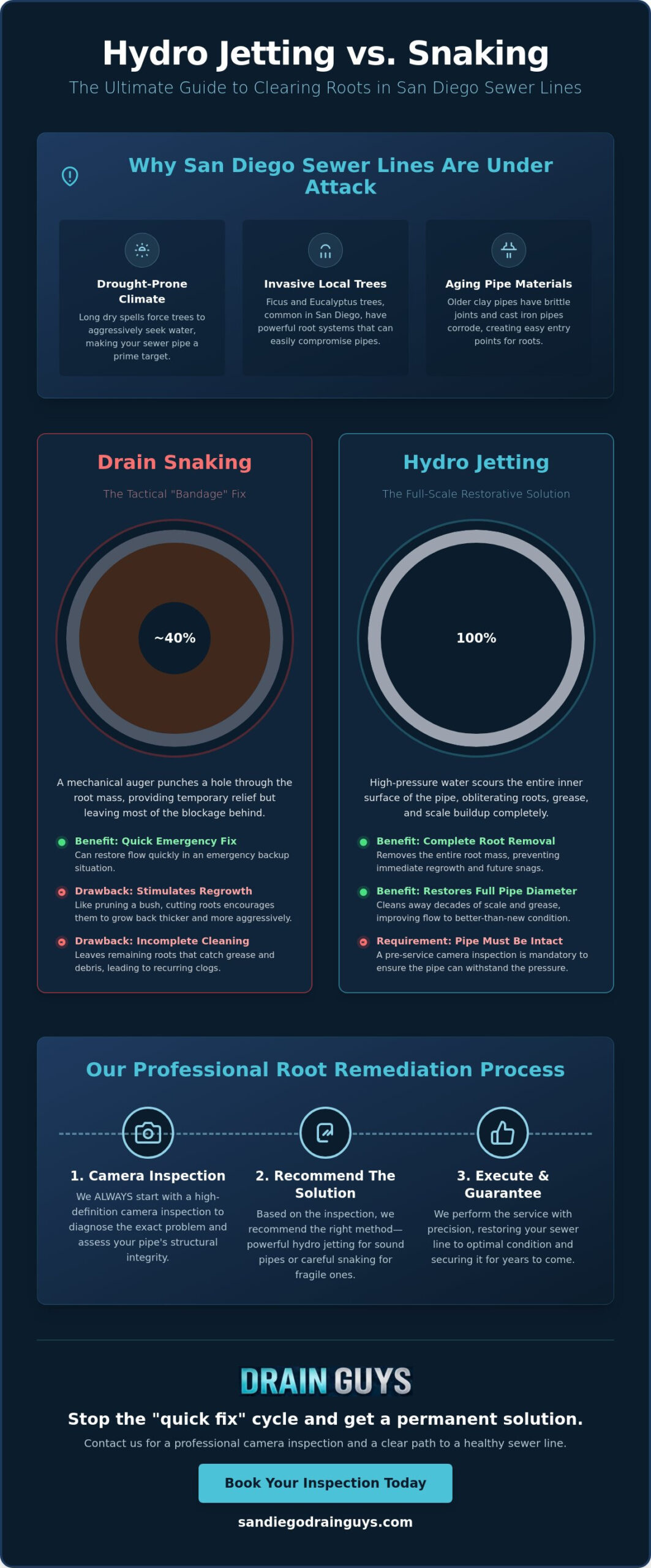
Snaking, also known as cabling, uses a flexible steel cable powered by a motor to rotate a metal blade through your sewer line. It’s effective for punching a hole through a solid obstruction to get your water flowing again quickly. For many San Diego residents, this is the standard response to a midnight backup. However, when comparing hydro jetting vs snaking for roots, it’s important to understand that a snake is a tactical tool, not a restorative one. It solves the immediate crisis without addressing the underlying infestation.
Think of a plumber’s snake like a drill. It creates a path through the root mass but leaves the perimeter of the pipe largely untouched. Tree roots are a primary cause of sewer blockages and overflows, and simply punching a hole through them doesn’t stop the growth. Because the auger only clears a small diameter, the remaining root “stubs” stay firmly attached to your pipe walls. These stubs act like a filter, catching toilet paper and grease that should be flowing freely to the city main. If you’re currently facing a backup, our team can help you evaluate your options at San Diego Drain Guys.
We often recommend snaking only in specific, limited scenarios. If your pipes are extremely fragile, such as old Orangeburg or crumbling clay, the high pressure of a jetter might be too risky. In those cases, a gentle cabling might be the only safe way to restore flow. But for most homeowners, the low upfront price of snaking is a trap. You might pay less today, but you’ll likely be calling a plumber back within a few months for the exact same problem. This recurring expense quickly exceeds the cost of a one-time permanent solution.
The Limitations of Mechanical Augers
- Flexible Root Evasion: Roots are often flexible. The rotating blades of a snake can simply push them aside or skip over them rather than cutting them away.
- Joint Damage: The heavy mechanical cable can “jump” inside the pipe, potentially cracking old cast iron or dislodging clay joints that are already weakened by age.
- The “Fertilizer” Effect: Snaking leaves behind grease and sludge. This organic material clings to the remaining root stubs, essentially acting as fertilizer that helps the roots grow back even faster.
Expectation Management: How Long Does Snaking Last?
In our experience across San Diego, a snaked line typically provides a relief period of 6 to 12 months. This timeline can be even shorter if you have aggressive Eucalyptus or Ficus trees nearby. Relying on snaking as a long-term strategy is dangerous. Every time the roots grow back, they expand, putting more pressure on the pipe walls. Eventually, this pressure leads to a total pipe collapse, turning a simple cleaning job into a massive trenchless repair project. We view snaking as an “emergency only” mindset, not a maintenance plan.
Hydro Jetting for Roots: The Full-Scale Restorative Solution
While snaking is a temporary fix for an immediate problem, hydro jetting is a restorative process that returns your sewer line to a like-new condition. We utilize specialized equipment that delivers up to 4,000 PSI of pressurized water through 360-degree nozzles. This isn’t just a stream of water; it’s a high-velocity tool designed to pulverize invasive root masses and wash away decades of accumulated grease, scale, and sludge. When homeowners evaluate hydro jetting vs snaking for roots, the primary difference is the thoroughness of the cleaning. Jetting doesn’t just punch a hole; it scours the entire interior diameter of the pipe.
This deep cleaning is essential for more than just clearing a clog. It’s often the mandatory precursor to more permanent solutions like CIPP sewer lining. For a trenchless liner to bond correctly to your existing pipe, the walls must be completely free of debris and root stubs. Hydro jetting provides that pristine surface, ensuring that any subsequent repairs are built on a solid, clean foundation. We view this method as the gold standard for maintaining the health of San Diego sewer laterals.
The Science of High-Pressure Water
The engineering behind a hydro jetter is fascinating. The nozzle features a single “Forward Jet” that acts as a spear to break through the initial clog. Simultaneously, multiple “Rear Jets” angle backward to propel the hose forward while scouring the pipe walls with intense force. Using water is actually safer for most structurally sound pipes than metal blades. Hydro jetting is a non-invasive surgical cleaning method for sewers.
The effectiveness of high-pressure water technology extends to the surface level as well; companies like Poseidon Power Washing LLC specialize in using precision cleaning techniques to maintain the exterior of luxury residential and commercial properties.
Long-Term Benefits of Jetting
- Eliminating Root Attraction: By removing the “food source” of grease and organic debris, you make your pipes less attractive to seeking root hairs.
- Extended Service Intervals: A properly jetted line can often go several years without needing another service, compared to the 6 to 12-month cycle common with snaking.
- Diagnostic Clarity: Only a jetted pipe is clean enough to allow for a perfect post-cleaning camera inspection. This allows us to see every hairline crack or joint separation that roots might use for future entry.
Decision Framework: Hydro Jetting vs. Snaking for Roots
Choosing between hydro jetting vs snaking for roots often comes down to a simple question: are you looking for a temporary fix or a long-term investment? We believe in providing our neighbors with the data they need to make the right choice for their specific situation. This decision shouldn’t be based on a guess; it should be based on the structural reality of your pipes and your long-term goals for your property. We don’t want you to keep paying for a problem that can be solved permanently.
The first factor we always evaluate is the structural integrity of your line. Using camera data, we determine if your pipe is a candidate for high-pressure cleaning. If the pipe is already collapsing or has large sections missing, the 4,000 PSI force of a jetter could cause further damage. However, if the pipe is structurally sound but simply choked with roots, jetting is the only way to clear the path completely. Frequency of service is also a major indicator. If you’ve had to snake your line twice in the last 18 months, you’re essentially paying for a “subscription” to a broken sewer. It’s time to break that cycle with a restorative cleaning.
Your future plans for the home also matter. If you plan to stay in your San Diego home for the next 20 years, investing in a “one-and-done” solution like jetting saves you thousands in recurring service calls over time. Even if you’re planning to sell, a jetted line provides a clean post-service camera report that can be a major selling point for savvy buyers. We can help you determine the best path forward with a professional sewer evaluation.
When to Choose Snaking
- Structurally Compromised Pipes: If your line is cracked, brittle, or actively collapsing, the mechanical cable of a snake is a safer, gentler way to restore flow without risking a total blowout.
- Localized Fixture Clogs: When the backup is limited to a single sink, tub, or toilet, a standard auger is usually all you need to clear the obstruction.
- Immediate Crisis Management: If you need the water running right now to get through a holiday weekend and aren’t ready for a full restorative service, snaking is a valid short-term fix.
When to Choose Hydro Jetting
- Heavy Main Line Roots: When aggressive roots have overtaken your primary sewer lateral, only high-pressure water can clear the full diameter and remove the stubs.
- Preparation for Permanent Fixes: Jetting is the essential first step if you’re planning for trenchless sewer repair, as the new liner needs a perfectly clean surface to bond to.
- Commercial Applications: Restaurant owners dealing with a combination of heavy grease and root intrusion should always opt for jetting to ensure their lines stay open under high-volume usage.
The San Diego Drain Guys Difference: Professional Root Remediation
At San Diego Drain Guys, we believe that transparency is the foundation of every service we provide. We don’t believe in guesswork or ballpark estimates that change the moment a technician arrives at your door. This is why every root remediation project we undertake begins with a high-definition camera inspection. We need to see the exact nature of the intrusion to give you an honest, professional recommendation on hydro jetting vs snaking for roots. By seeing the interior of your pipes in real-time, we can provide a flat-rate, transparent quote that ensures there are no hidden emergency fees or financial surprises at the end of the job.
Clearing the blockage is only half the battle in our local environment. To prevent immediate regrowth, we often utilize RootX foaming treatments as a strategic follow-up. While jetting removes the bulk of the mass, this treatment reaches the very top of the pipe where roots often enter. It kills the microscopic hairs that even the most precise tools might miss. It is about moving beyond simple maintenance and toward professional drain cleaning and long-term lining solutions. Our goal is to move you away from the cycle of recurring backups and toward a permanent, worry-free sewer system that protects your property value.
Our “Calm Expert” Process
- Step 1: Locate and Diagnose: We use HD sewer scopes to identify the exact entry points of the roots and assess the structural health of your line.
- Step 2: Precision Clearing: We clear the path with precision hydro jetting, using 4,000 PSI to restore the pipe’s original interior diameter.
- Step 3: Verification: We verify the results with a final camera pass. We provide you with a video copy of the clean pipe so you have total peace of mind.
Protecting Your San Diego Property
We understand that having plumbing work done can be stressful and invasive. We treat your landscape and interior with the highest degree of privacy and respect, behaving as guests in your home rather than just contractors. Our technicians are disciplined and methodical; they are trained to work cleanly to ensure your home remains a sanctuary throughout the process. We pride ourselves on exceeding standard service levels. This means our team often spends more time on the final flush and quality check than they do on the initial root removal. We want to be absolutely certain that every piece of debris is gone before we consider the job finished. We are local problem-solvers who take pride in our community. If you are ready for a permanent solution and an end to the anxiety of sewage backups, Contact San Diego Drain Guys for a flat-rate quote today.
Take Control of Your Home’s Sewer Health
Dealing with recurring backups is exhausting. You now know that the debate over hydro jetting vs snaking for roots isn’t just about price; it’s about the difference between a temporary bandage and a total pipe restoration. By choosing a high-pressure solution, you remove the grease and root stubs that lead to future clogs. This proactive step protects your property from the stress of sewage spills and the high costs of emergency repairs that often follow repeated cabling.
We are here to help you move from a state of worry to a state of informed confidence. Our team has successfully restored over 1,000 San Diego sewer lines. We are recognized specialists in trenchless CIPP lining and always operate with a flat-rate transparent pricing model. We believe in getting the job done correctly the first time without any hidden surprises or unnecessary complications. We treat your domestic environment with the highest level of privacy and empathy.
Schedule Your San Diego Hydro Jetting Service Now and let our calm experts provide the permanent solution your home deserves. You can trust us to protect your landscape and your peace of mind.
Frequently Asked Questions
Will hydro jetting damage my old clay sewer pipes?
Hydro jetting is safe for clay pipes as long as they are structurally sound. We always perform a high-definition camera inspection first to check for cracks or collapses before starting the process. If your pipes are old but solid, the water pressure won’t hurt them. It’s actually safer than metal blades that can catch on joints and cause displacement.
Does hydro jetting remove tree roots permanently?
No, hydro jetting doesn’t stop roots from growing back forever, but it clears them much more effectively than snaking. Tree roots are naturally drawn to the moisture in your sewer line and will eventually return unless the entry points are sealed. For a permanent fix, we recommend exploring trenchless pipe lining after the restorative cleaning is complete.
How much does hydro jetting cost in San Diego compared to snaking?
In San Diego, hydro jetting is a higher upfront investment than snaking but offers superior long-term value. While a snake is a cheaper emergency fix, it often leads to recurring service calls that add up quickly. Jetting provides a restorative clean that clears the entire pipe diameter, saving you money over time by preventing frequent professional visits.
Can I rent a hydro jetter and do it myself?
We strongly advise against attempting to hydro jet your own sewer lines. These machines operate at 4,000 PSI, which is powerful enough to cause severe physical injury or destroy your plumbing if handled incorrectly. Professional technicians have the specific training to adjust pressure levels based on your pipe material to prevent accidental damage to your home.
What happens if hydro jetting doesn’t solve the root problem?
We recommend moving to trenchless repair or CIPP lining if the roots have already caused structural failure. Sometimes roots are so thick or the pipe is so badly broken that cleaning isn’t enough. A post-jetting camera inspection will show us the exact condition of your pipe walls so we can plan a more permanent structural intervention.
How often should I have my sewer line hydro jetted for preventative maintenance?
Most San Diego homeowners with mature trees find that a preventative flush every 24 to 36 months is ideal. This schedule keeps your lines clear of grease and small root hairs before they can become a major blockage. Regular maintenance is the best way to avoid the stress and mess of a sudden sewage backup in your yard.
Is hydro jetting safe for PVC and ABS plastic pipes?
Yes, hydro jetting is completely safe and highly effective for modern PVC and ABS plastic pipes. These materials are very durable and have smooth interiors that handle high-pressure water with ease. Since plastic pipes have fewer joints than older clay pipes, they are also less likely to suffer from root intrusion in the first place.
Why do roots keep coming back after I had my drain snaked last year?
Roots return quickly after snaking because the mechanical blades only punch a small hole through the mass. When comparing hydro jetting vs snaking for roots, it’s important to remember that snaking leaves behind stubs that catch toilet paper and grease. These stubs often grow back thicker and faster because mechanical cutting stimulates the tree’s natural growth response.