
The bottle of chemical drain cleaner sitting under your sink might actually be the biggest threat to your home’s plumbing health. We understand the immediate panic that sets in when you’re searching for a “clogged sink drain near me” after water stops flowing in the middle of a dinner party. It’s frustrating to deal with slow-moving water and the unpleasant odors that follow; it’s even worse when you’re worried about the cost of an emergency repair or damaging your older San Diego pipes with harsh store-bought liquids.
You deserve a home that functions reliably without the constant fear of a plumbing disaster. We’ve put together this 2026 guide to help you safely diagnose the problem, attempt proven DIY fixes, and understand when a professional touch is necessary to protect your property. We’ll walk you through the impact of San Diego’s hard water on your drains and provide a clear roadmap to getting your pipes flowing freely again so you can get back to your day with total peace of mind.
Key Takeaways
- Learn how to distinguish between a localized kitchen sink blockage and a more serious main line issue before you start troubleshooting.
- Master safe DIY clearing techniques using basic plungers and natural household solutions that won’t damage your San Diego home’s pipes.
- Understand the hidden risks of caustic chemical cleaners and why they often cause more harm than good to your plumbing infrastructure.
- Recognize the specific red flags that indicate it is time to stop DIY attempts and search for a professional clogged sink drain near me.
- Discover how advanced solutions like Sewer Camera Inspections and Hydro Jetting provide a deeper, more permanent clean than traditional snaking.
Understanding Why Your Sink Drain is Clogged
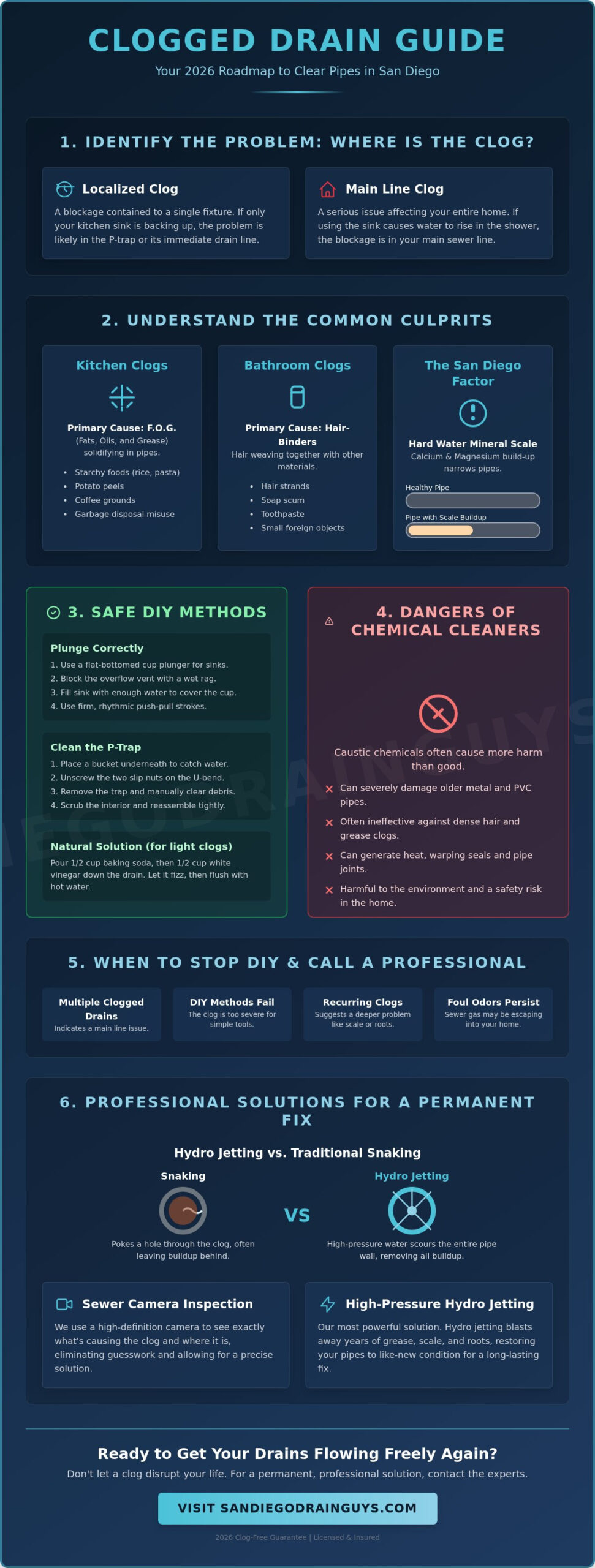
Identifying the root cause of a blockage is the first step toward a permanent solution. When you find yourself searching for a “clogged sink drain near me,” it’s vital to know if you’re dealing with a simple localized issue or a systemic main line failure. A localized clog stays contained to one sink; if you run the water in the kitchen and only that basin fills up, the blockage is likely in the P-trap or the immediate branch line. If you notice water rising in the shower while the kitchen sink drains, you have a much larger problem in your main sewer line that requires professional diagnostic tools rather than a simple plunger.
Kitchen vs. Bathroom Clog Dynamics
In the kitchen, clogs are almost always organic and sticky. We see many issues caused by FOGs; fats, oils, and grease. These substances might be liquid when they’re hot, but they solidify quickly once they hit the cool environment of your pipes. This creates a tacky lining that catches every food particle that passes by. We also find that garbage disposal misuse is a leading cause of backups. People often treat disposals like trash cans, but starchy items like rice, pasta, and potato peels create a thick, glue-like paste that can completely seal off a drain over time.
Bathroom clogs are more structural in nature. Hair is the primary culprit here, acting as a binding agent for soap scum and toothpaste. These materials weave together to create a dense, rope-like mass that is difficult to move. Understanding how chemical drain cleaners work helps explain why these clogs are so persistent; many caustic cleaners struggle to eat through the thick oils and hair fibers without risking the integrity of your seals and pipes. These “hair-binders” often require manual removal or mechanical snaking to fully clear the line.
The Role of San Diego Hard Water
San Diego homeowners face a unique challenge: mineral scaling. Our local water supply is rich in calcium and magnesium. Over time, these minerals precipitate out of the water and bond to the interior walls of your plumbing. This scaling slowly narrows the path for water, much like a clogged artery. These deposits are incredibly rough, creating “anchors” that catch hair and debris that would otherwise wash away freely. Because mineral scale is essentially stone, it won’t respond to a plunger or basic home remedies. Restoring your pipes often requires professional descaling or hydro jetting to remove the buildup and prevent a recurring clogged sink drain near me.
Safe DIY Methods to Unclog a Sink Drain
Most homeowners want to resolve a clogged sink drain near me before calling in the professionals. It is a practical way to save money and gain a better understanding of your home’s infrastructure. However, the key is to use methods that clear the blockage without causing collateral damage to your pipes. While the “coat hanger” method suggested on some forums might seem easy, it often scratches porcelain and can even puncture older, weakened metal pipes. We recommend a more methodical, professional approach to DIY maintenance.
The Proper Way to Plunge a Sink
Plunging is the most common first step, yet it is frequently done incorrectly. First, ensure you are using a flat-bottomed cup plunger. These are designed specifically for the flat surfaces of sinks and tubs; the flanged plungers you see next to toilets are meant for the curved exit of a commode. In a bathroom sink, you must cover the overflow vent with a wet rag or a piece of duct tape. If you don’t block this vent, the air will simply escape there instead of pushing against the clog. Fill the sink with enough water to cover the plunger cup, then use firm, rhythmic strokes to create the necessary pressure and suction to dislodge the mass.
Cleaning the P-Trap Step-by-Step
If plunging doesn’t work, the blockage is likely sitting in the P-trap. This is the U-shaped pipe directly under your sink designed to hold water and block sewer gases. Because of its shape, it is also the primary collection point for the FOGs and hair-binders we discussed earlier. To clean it, you will need a bucket, a pair of channel-lock pliers, and a few towels. Place the bucket under the trap to catch the “standing water” that remains in the pipe. Carefully unscrew the slip nuts at both ends of the U-bend. Once removed, you can manually clear out the debris and scrub the interior of the pipe with an old brush. Always check the horizontal arm that leads into the wall, as grease often accumulates there as well.
For those who prefer a liquid solution for minor maintenance, skip the harsh acids. A mixture of half a cup of baking soda followed by half a cup of white vinegar can help break up light organic buildup through a safe chemical reaction. If you are looking for effective retail products that are gentler on your plumbing and the environment, consult the EPA’s Safer Choice program for certified cleaners. If you have cleaned the trap and the water still refuses to flow, you may be facing a deeper issue that requires a professional sewer camera inspection to locate the obstruction. Stop your DIY efforts if you feel significant resistance or if you notice water leaking from joints that were previously dry.
Why Store-Bought Chemical Cleaners May Damage Your San Diego Home
When you’re dealing with a frustrating backup, the $10 bottle of liquid drain cleaner at the grocery store looks like a bargain. It’s tempting to think a quick pour will solve your search for a “clogged sink drain near me” without the need for a service call. However, these products often create more problems than they solve. Most of these cleaners rely on harsh caustic chemicals like sodium hydroxide or sulfuric acid to eat through blockages. While they might clear a small path, the collateral damage to your San Diego home’s plumbing can be severe and expensive to repair.
Chemical Reactions and Pipe Integrity
The primary way these cleaners work is through an exothermic reaction. This means they generate intense heat to melt away grease and hair. In modern PVC pipes, this heat can actually soften the plastic, leading to warped joints or even complete pipe failure. If you live in one of San Diego’s many older neighborhoods, your home might still have galvanized steel pipes. Caustic chemicals are incredibly corrosive to these metal surfaces, eating away at the interior walls and accelerating the development of leaks. We also want to highlight a safety concern: if the chemical fails to clear the clog, it sits in your pipes as a pool of toxic acid. This makes future professional repairs much more dangerous for our technicians, as standing chemicals can cause severe burns during the disassembly process.
The Myth of the “Permanent” Liquid Fix
We often see homeowners fall into the “temporary fix” trap. Liquid cleaners rarely remove a whole clog; instead, they simply “tunnel” a small hole through the center of the mass. This allows water to flow again briefly, but the bulk of the obstruction remains. Because the chemical leaves behind a sticky, partially dissolved residue, it actually acts as a magnet for new debris. New hair, soap scum, and food particles catch on this residue even faster than before, leading to a recurring backup within weeks.
Beyond your home’s walls, these chemicals pose a risk to the San Diego water table. Our local environment is sensitive, and what you pour down the drain eventually impacts our broader ecosystem. We recommend switching to enzymatic cleaners like Bio-Clean as a proactive monthly maintenance habit. These products use natural bacteria and enzymes to eat through organic matter safely without heat or corrosion. They are a much smarter investment for the long-term health of your plumbing and the community. By avoiding harsh acids, you protect your pipes and ensure that a minor issue doesn’t turn into a major repiping project.
When to Stop DIY and Search for “Drain Cleaning Near Me”
Taking pride in home maintenance is a hallmark of many San Diego residents. However, there comes a point where continuing to plunge or snake a stubborn line transitions from being helpful to being risky. Recognizing the limits of consumer-grade tools protects your plumbing from accidental damage and ensures your home remains a safe, sanitary environment. If you’ve been searching for a “clogged sink drain near me” because your initial attempts didn’t stick, it’s time to evaluate these critical red flags.
We recommend looking for these specific indicators that a professional intervention is necessary:
- Multiple fixtures are backing up: If your kitchen sink, laundry line, and bathroom drain are all slow at the same time, the problem isn’t in one pipe. It’s a systemic issue that requires a more powerful solution.
- Cross-fixture backups: Seeing water rise in your shower when you run the bathroom sink is a clear sign of a deep blockage. This indicates that water has nowhere to go but back up the nearest branch line.
- Foul odors or gurgling: Persistent smells often point to decaying organic matter that DIY flushes can’t reach. Gurgling sounds suggest air is being trapped by a blockage, which can eventually lead to a complete pressure-related failure.
- Recurring clogs: If you’ve cleared the same drain twice in a month and it keeps backing up, you aren’t actually removing the obstruction. You’re likely just poking a small hole in a larger mass of debris.
Identifying Main Line vs. Local Clogs
Determining the scale of the issue is vital for your next steps. You can often diagnose this by checking the lowest drain in your house, which is usually a floor drain or a downstairs shower. If water is pooling there regardless of which sink you use, you are likely facing a main line obstruction. In these cases, searching for main drain cleaning near me is the most efficient way to prevent a total sewage backup into your living space. Ignoring a main line issue can lead to catastrophic overflows that compromise your home’s hygiene and structural integrity.
The Cost of Delaying Professional Help
We understand the desire to avoid a service bill, but delaying a necessary repair often leads to much higher expenses. A solid blockage creates immense pressure within your pipes. Over time, this pressure can cause joints to separate or pipes to burst, leading to extensive water damage in your cabinetry and flooring. Professional tools like high-resolution cameras can find the exact location of a clog without the guesswork that often leads to damaged fixtures. It’s much more cost-effective to schedule a professional drain service now than to replace your kitchen island or subflooring later. If your DIY efforts haven’t provided a lasting fix, reach out to our dependable problem-solvers to restore your home’s plumbing safely and effectively.
Professional Solutions: How San Diego Drain Guys Fixes It Right
When local homeowners reach out after searching for a clogged sink drain near me, they often expect a simple mechanical snake to solve the problem. While traditional snaking has its place for minor blockages, our goal is to provide a comprehensive cleaning that prevents the issue from returning next month. We don’t just poke a hole through the debris; we restore the integrity of your plumbing system using advanced technology and a methodical approach. Our team focuses on long-term reliability rather than a quick, temporary fix.
Hydro Jetting vs. Traditional Snaking
Traditional snaking uses a metal cable to punch through a blockage. This works for hair clogs but often leaves behind the grease and mineral scale we discussed earlier. In contrast, hydro jetting services san diego use high-pressure water to scour the entire interior wall of the pipe. This process removes the buildup, including the stubborn calcium deposits caused by our local hard water. It’s a much safer long-term investment for older San Diego plumbing because it doesn’t involve the aggressive scraping of metal blades against fragile pipe walls. By cleaning the entire diameter of the pipe, we ensure that new debris has nothing to catch on as it washes away.
Why We Start with a Camera Inspection
We believe in transparency, which is why we never guess what’s happening underground. Every major service begins with a visual diagnostic. Using a sewer scope near me allows us to identify specific issues like tree root intrusion, cracks, or bellies where the pipe has sagged. We invite you to look at the monitor with us. Seeing the exact cause of the clog before we work ensures we only perform the necessary repairs. We also provide a view of the clean pipes after the job is finished so you can see the results with your own eyes. This visual confirmation provides the peace of mind that your plumbing is truly restored.
Our approach is built on reliability and respect. We utilize a flat-rate pricing model to ensure you aren’t hit with hourly surprises or hidden fees. This transparency is our signature; it allows you to make informed decisions without financial uncertainty. We also understand that we are guests in your personal environment. We work with a high degree of privacy and empathy, ensuring we protect your flooring and clean up every trace of our work before we leave. You deserve the relief of a permanent solution handled by capable, neighborly hands.
Restore Flow and Peace of Mind to Your Kitchen
Managing a functional home in San Diego requires a proactive approach to plumbing maintenance. We’ve explored how a balance of safe DIY techniques and professional diagnostic tools can combat the unique challenges of local mineral scale and organic buildup. By avoiding caustic chemicals and recognizing the red flags of a main line issue, you protect your property from avoidable water damage and expensive pipe replacements. Our team is dedicated to providing the long-term solutions your home needs to stay efficient and worry-free.
As 5-star rated hydro jetting experts locally owned and operated since 2018, we take pride in serving our neighbors with integrity. If your search for a “clogged sink drain near me” has led to recurring frustration, it’s time for a definitive resolution. We offer transparent flat-rate pricing with no hidden fees, ensuring you know exactly what to expect before we begin our work. Get Flat-Rate Relief for Your Clogged Sink Today and experience the difference that professional empathy and technical skill can make. We look forward to helping you get your day back on track with clear, fast-flowing drains.
Frequently Asked Questions
Why is my kitchen sink clogged and how do I fix it?
Kitchen sinks usually clog because fats, oils, and grease (FOGs) solidify inside the pipes and trap food particles. You can often fix minor issues by using a cup plunger to create pressure or by manually removing the P-trap to clear out debris. To prevent this, avoid putting starchy foods like pasta or fibrous vegetables down your garbage disposal.
Is it safe to use Drano or Liquid-Plumr on a stubborn clog?
No, we don’t recommend using caustic chemical cleaners because they rely on intense heat that can damage your plumbing system. This exothermic reaction can soften PVC joints or accelerate corrosion in older metal pipes common in San Diego. Mechanical removal or enzymatic cleaners are much safer alternatives that protect your home’s long-term pipe integrity.
How much does a plumber charge to unclog a sink in San Diego?
Professional service costs vary depending on the severity of the blockage and the specific technology needed for the repair. Most dependable local experts utilize a transparent fee structure or a flat-rate model to prevent any financial surprises after the job is done. This approach ensures you receive a fair price for a permanent solution rather than a temporary fix.
Can a clogged sink cause a leak under the cabinet?
Yes, a total blockage creates significant internal pressure that can force water through pipe joints or worn-out seals. If you notice pooling water or dampness while searching for a “clogged sink drain near me,” the pressure has likely compromised a connection. It’s vital to address these leaks quickly to prevent mold growth and structural damage to your kitchen cabinetry.
What is the best way to prevent sink clogs in the future?
The best prevention method is using a drain strainer to catch hair and food scraps before they enter your plumbing. Never pour liquid grease down the drain, as it will eventually coat the pipe walls and catch other debris. We also suggest a monthly maintenance flush with enzymatic cleaners to safely dissolve organic films before they become a major problem.
Why does my sink make a gurgling sound when it drains?
Gurgling sounds indicate that air is struggling to move through your pipes because of a partial blockage or a vent issue. As water flows past the obstruction, it creates a vacuum that pulls air through the P-trap, resulting in that distinct noise. This sound is often a reliable early warning that a complete backup will happen soon if the line isn’t cleaned.
Does baking soda and vinegar actually work for sink clogs?
Baking soda and vinegar are effective for light maintenance and breaking up fresh organic residue. The chemical reaction creates a fizzing action that can help clear away minor films on the pipe walls. However, this method doesn’t provide enough physical force to move a dense “hair-binder” or a heavy mineral scale buildup caused by hard water.
When should I call for professional drain cleaning instead of DIY?
You should call for professional help if your DIY efforts have failed more than twice or if water is backing up into multiple fixtures. If you see water rising in the shower when you run the sink, you’re likely dealing with a main line issue. Professional tools like high-resolution cameras are necessary to find the exact cause of a recurring “clogged sink drain near me.”