
What if the most dangerous part of a sewer backup isn’t the mess you can see, but the microscopic pathogens you can’t? When water begins to pool in your basement or bathroom, it’s natural to focus on the immediate cleanup costs or that overwhelming odor. You might feel a deep sense of anxiety about whether your home is even habitable for your children or pets. We understand that fear, and it’s a valid concern because the health risks of sewer backup involve a complex mix of bacteria, viruses, and parasites that require professional attention and specialized care.
You deserve to feel safe and protected in your own home. In this guide, we’ll explain the hidden biological dangers of “black water” and provide the exact steps you need to take to protect your household from pathogens and long-term contamination. We’ll walk through an immediate safety checklist and discuss long-term solutions, such as hydro jetting and trenchless repairs, to ensure this never happens again. Our goal is to move you from a state of worry to a state of informed confidence, giving you the tools to handle this situation with transparency and local expertise.
Key Takeaways
- Understand why wastewater is classified as Category 3 “Black Water” and how it introduces severe biological hazards into your living space.
- Identify the specific health risks of sewer backup, including exposure to pathogens like E. coli, Salmonella, and Hepatitis A that can cause serious respiratory and gastrointestinal illness.
- Learn the immediate emergency protocols, including evacuation and the proper use of protective equipment, to minimize your family’s contact with contaminants.
- Discover why professional hydro jetting and sewer camera inspections are essential for sanitizing your pipes and preventing future biohazard recurrences.
Understanding Sewer Backups as a Biological Hazard
A sewer backup occurs when wastewater is forced back into your home through drains, toilets, or sinks. This usually happens because of a blockage or a failure in the main sewer line. While it might look like a simple plumbing mess, it’s actually an immediate transition from a maintenance issue to a biohazard emergency. Raw sewage is a complex cocktail of human waste, chemicals, and pathogens. Because of this, the health risks of sewer backup are significant and require a methodical response to ensure your family’s safety.
We view every backup through the lens of professional restoration standards. When sewage enters a home, it’s no longer just “dirty water.” It’s a biological threat that can contaminate the air you breathe and the surfaces you touch. Understanding what constitutes sewage is essential for homeowners, as it helps you recognize that this isn’t a DIY cleanup project. The presence of fecal matter and industrial chemicals means the environment is toxic from the moment the spill begins.
The Three Categories of Water Contamination
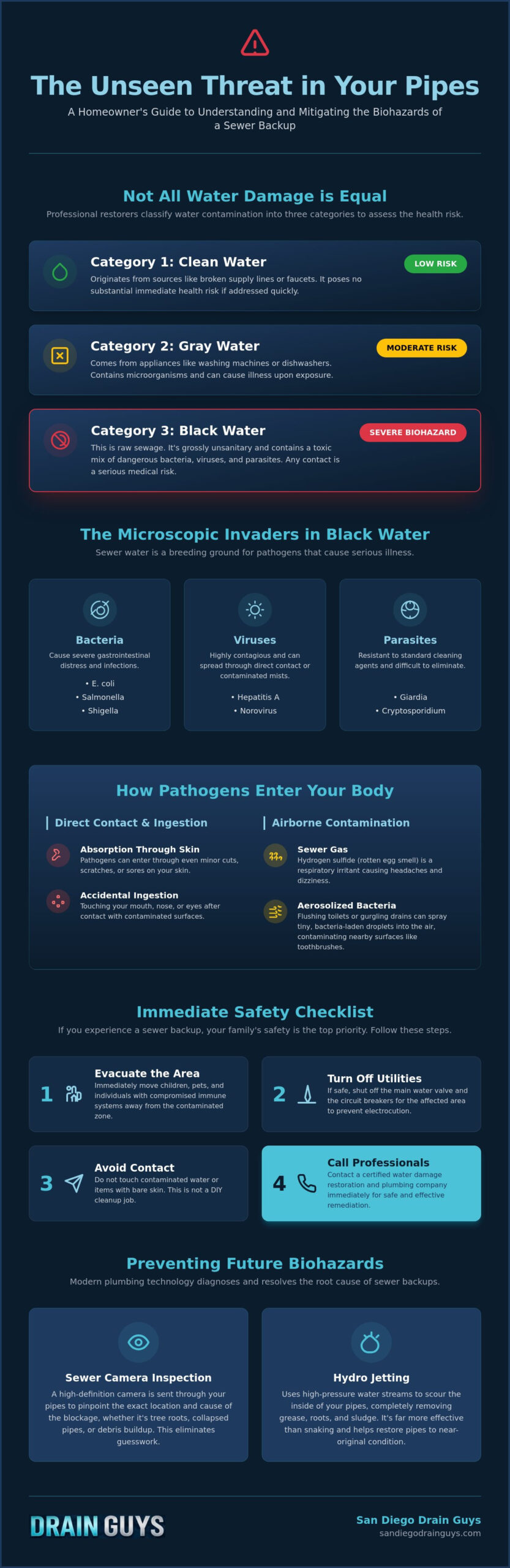
Professional restoration experts classify water damage into three categories based on the level of contamination. We use these categories to determine the safety protocols needed for your home:
- Category 1: Clean water from a broken supply line or a leaking faucet. It doesn’t pose a substantial risk if handled quickly.
- Category 2: Often called “gray water,” this comes from appliances like dishwashers or washing machines. It contains some microorganisms and nutrients that can support bacterial growth.
- Category 3: This is “black water,” which includes all sewage backups. It contains gross unsanitary agents, including bacteria, viruses, and parasites. Any contact with Category 3 water is considered a medical risk.
Why San Diego Homes are Susceptible to Backups
San Diego residents face specific environmental factors that increase the likelihood of a sewer failure. In older neighborhoods like North Park or La Jolla, many homes still utilize aging clay pipes. These pipes are highly susceptible to invasive tree roots. Eucalyptus trees, which are icons of our local landscape, have aggressive root systems that can easily penetrate small cracks in a sewer lateral to find water.
Topography also matters. If your home is located at the bottom of a hill or in a canyon, your plumbing system may face increased pressure when the municipal lines are overwhelmed by heavy rainfall. Additionally, San Diego’s coastal humidity can be a silent enemy. High moisture levels in the air can accelerate the growth of bacteria and mold once a spill occurs, making it even more important to act fast. We focus on these local variables to provide a long-term solution that protects your property from recurring biohazards.
The Microscopic Danger: Bacteria, Viruses, and Parasites
The health risks of sewer backup are not limited to what you can see floating in the water. We often find that the most persistent threats are microscopic. Bacteria like E. coli, Salmonella, and Shigella are common residents in wastewater. These organisms cause severe gastrointestinal distress and can linger on porous surfaces long after the liquid is gone. Viral risks are equally concerning. Hepatitis A and Norovirus can spread through direct contact or even through fine mists created during the backup. These pathogens in raw sewage are resilient. Parasites such as Giardia and Cryptosporidium are particularly difficult to eliminate because they can survive standard household cleaning agents.
Pathogens enter the body through three primary routes: accidental ingestion, contact with open cuts, or absorption through mucous membranes like the eyes and nose. This is why we advise against any DIY cleanup without industrial-grade protection. If you suspect a deeper issue in your lines, a professional plumbing assessment can identify the source of the contamination before it reaches your living space.
Airborne Pathogens and Sewer Gas
The smell of a backup is often the first warning sign. Hydrogen sulfide gas provides that distinct rotten egg odor. While the smell is unpleasant, the gas itself is a respiratory irritant that can cause headaches or dizziness in high concentrations. When a toilet flushes or a drain gurgles during a backup, it can aerosolize bacteria. These tiny droplets stay suspended in the air, allowing pathogens to settle on toothbrushes, towels, and countertops far from the initial spill. Short-term exposure often leads to sinus irritation, while long-term exposure can exacerbate existing asthma or respiratory conditions.
Secondary Risks: Mold and Fungal Growth
Time is your biggest enemy when wastewater meets drywall. You have a narrow 24 to 48 hour window before mold begins to colonize damp materials. In San Diego, our persistent marine layer often keeps indoor humidity high, which slows down the natural drying process. This environment is perfect for Stachybotrys, commonly known as toxic black mold. This fungus thrives on the cellulose in drywall and wood that has been saturated by sewage. Preventing these secondary health risks requires deep sanitation, often starting with hydro jetting to clear the biohazards from the pipes themselves.
Categorizing the Medical Risks of Exposure
The health risks of sewer backup manifest differently depending on an individual’s age and overall health status. We find that vulnerable populations, specifically children, seniors, and family pets, are often the first to show symptoms. Children are at higher risk because their immune systems are still developing and they are more likely to touch contaminated surfaces before putting their hands in their mouths. Seniors may have compromised immune systems, making it harder for them to fight off waterborne infections. Pets, who live closer to the floor and groom themselves with their tongues, can easily ingest pathogens settled on carpets or tiles.
Gastrointestinal distress is the most frequent medical complication reported after exposure. This isn’t just a simple stomach ache; it often involves severe cramping and prolonged illness. Beyond the gut, skin infections are a major concern. Leptospirosis, also known as Weil’s Disease, is a bacterial infection that can enter the body through small cuts or even through the skin if it stays in contact with contaminated water for too long. If left untreated, these infections can lead to more serious neurological or respiratory symptoms as the body’s inflammatory response kicks in.
Common Symptoms to Watch For
If you have recently experienced a backup in your San Diego home, monitor your family closely for these physical signs, as the health risks of sewer backup can remain hidden for days. Symptoms may not appear immediately because many bacterial and viral infections have incubation periods. Look for:
- Severe abdominal cramping accompanied by persistent nausea and vomiting.
- Unexplained skin rashes, red welts, or itchy sores that appear after contact with damp materials or standing water.
- A sudden onset of fever and chills, which often indicates the body is fighting a systemic infection, particularly after a DIY cleanup attempt.
When to Seek Immediate Medical Attention
We recommend a safety first approach. If you or a family member begins to show signs of severe dehydration, such as extreme thirst, dark urine, or dizziness, seek medical help immediately. Waterborne illnesses can deplete the body’s fluids much faster than a standard flu. Pay close attention to symptoms specific to Hepatitis A, such as jaundice (yellowing of the eyes or skin) and unusually dark urine, as these require professional medical management.
Finally, don’t overlook the importance of a Tetanus booster. Raw sewage often contains sharp debris or rusty metal from aging pipes. If you sustained any puncture wounds or deep scratches during the backup event, a doctor should verify your immunization status. Protecting your family’s health is a two track process: medical professionals handle the symptoms, while we handle the technical remediation to ensure your environment is safe for your return.
Emergency Response: Immediate Steps to Mitigate Health Risks
When you discover a sewage spill, your first instinct is likely to grab a mop and start cleaning. However, the health risks of sewer backup are too severe for a standard response. We recommend an immediate evacuation of the affected zone. Children and pets should be moved to a different floor or out of the house entirely. Their smaller size and faster respiratory rates make them more susceptible to the pathogens we discussed in earlier sections. Speed is important, but your personal safety must come first.
Once the area is clear, you must stop the flow of water. Shut off your main water line to prevent anyone in the house from accidentally adding more volume to the backup. It’s vital to follow a strict “No-Flush” rule. Even if the backup is only in one bathroom, using a toilet or sink elsewhere in the home can force more wastewater out of the lowest drain. If you must enter the area to retrieve essentials, you need proper Personal Protective Equipment (PPE). This includes waterproof boots, heavy duty rubber gloves, eye protection, and an N95 mask to filter out aerosolized contaminants.
What NOT to Do During a Sewer Emergency
We often see homeowners make well intentioned mistakes that worsen the situation. Never use a standard shop-vac to remove raw sewage. These machines are not designed for biohazards and will spray microscopic bacteria and viruses directly into the air you breathe. Avoid the temptation to mix cleaning chemicals. Combining bleach and ammonia creates a toxic gas that can be fatal in enclosed spaces. Finally, never walk through the area in porous shoes like sneakers or, worse, barefoot. Pathogens can easily penetrate fabric and enter your bloodstream through small abrasions on your feet.
Protecting Your HVAC and Electrical Systems
Biological contaminants don’t stay on the floor. To mitigate the health risks of sewer backup, turn off your air conditioning or furnace immediately. Leaving the system running can pull airborne pathogens into your ductwork, spreading the contamination throughout your entire home. If the backup has reached a crawlspace or basement, be extremely cautious of electrical shock. Do not enter standing water if there is any chance it has reached electrical outlets or exposed wiring.
Before the professional remediation begins, take clear photos of the damage from a safe distance. This documentation is essential for your insurance claim. If you need an immediate assessment of your sewer line’s integrity, contact our team for a professional sewer camera inspection to identify the exact cause of the failure and ensure your home is safe to inhabit.
Professional Remediation and Preventing Future Backups
Cleaning up the visible mess is only half the battle. To truly eliminate the health risks of sewer backup, you must address the structural plumbing failure that caused the spill in the first place. We view professional remediation as a two part process: sanitizing the living environment and rehabilitating the sewer line. While a restoration company handles your flooring and drywall, we focus on identifying the biological “ground zero.” By performing sewer camera inspections, we can see exactly where roots or blockages have compromised the system’s integrity.
While snaking might clear a path, it rarely solves the underlying structural issue. To prevent a recurrence, we utilize trenchless sewer repair. These modern techniques allow us to fix your pipes without excavating your yard. This keeps contaminated soil safely underground and protects your family from further exposure to the pathogens we detailed earlier. It’s a cleaner, faster, and more methodical way to restore your home’s safety.
Sanitizing the Source with Hydro Jetting
Standard plumbing snakes are designed to poke a hole through a clog, but they often leave behind a thick, bacteria rich biofilm on the pipe walls. This residue continues to harbor the very pathogens that create the health risks of sewer backup. Our hydro jetting services in San Diego use water pressure exceeding 4000 PSI to scour the interior of your lines. This process returns the pipes to a “like-new” state, removing grease, scale, and organic matter that bacteria feed on. Because it relies entirely on high velocity water, it’s a chemical free solution that respects our local environment while ensuring total sanitation.
Permanent Solutions: CIPP and Pipe Bursting
For homes with recurring root intrusion or structural pipe failure, we recommend CIPP lining. This “cured-in-place” technology creates a seamless, joint-free pipe within your existing line. Because there are no joints, roots have no way to penetrate the system, effectively sealing out future biological hazards. If the existing pipe is too collapsed for lining, pipe bursting provides a similar “no-dig” benefit by pulling a new, high density polyethylene pipe through the old one.
We believe in a disciplined, methodical approach to sewer rehabilitation. Our team provides transparent, flat-rate pricing to remove financial uncertainty from an already stressful situation. By combining advanced technology with neighborly service, we help you reclaim your home’s safety and your own peace of mind.
After the stress of a home emergency, returning to your regular self-care routine is a vital step in moving forward. For professionals who need to maintain a sharp, confident image, you can visit George’s Barbershop to experience premium grooming services that help you look and feel your best.
Securing Your Home Against Biological Hazards
Protecting your family means treating a sewer failure as more than just a standard plumbing repair. We have established that the health risks of sewer backup are immediate and persistent, involving a dangerous combination of bacteria, viruses, and the potential for toxic mold growth. By prioritizing rapid evacuation and professional sanitization, you prevent a temporary mess from becoming a long-term medical concern. Our team focuses on identifying the exact failure point to ensure your pipes aren’t just clear, but structurally sound and biologically safe for everyone in your household.
As locally owned San Diego experts, we utilize advanced trenchless technology to fix the root cause of backups without destroying your landscaping or exposing contaminated soil. We believe in transparent flat-rate pricing models that remove financial uncertainty during a high-stress emergency. This methodical approach ensures the job is done correctly the first time. Get a Professional Sewer Camera Inspection and Peace of Mind from San Diego Drain Guys today. You don’t have to face these complex plumbing challenges alone. We are ready to help you restore a healthy, safe environment for your family.
Frequently Asked Questions
Is it safe to stay in a house with a sewer backup?
Staying in a home with active sewage is not recommended because the environment is considered a biological hazard. Raw sewage contains aerosolized bacteria and toxic gases like hydrogen sulfide that can cause immediate respiratory issues. We advise residents, especially children and seniors, to relocate until a professional remediation team confirms the area is fully sanitized and safe for habitation.
Can sewer backup smells make you sick?
Yes, the odors associated with a backup often indicate the presence of sewer gas and aerosolized pathogens. The “rotten egg” smell is caused by hydrogen sulfide, which can lead to headaches, dizziness, and sinus irritation. These smells often accompany fine liquid droplets that carry the health risks of sewer backup into the air, where they can be inhaled or settle on household surfaces.
How do you disinfect a house after a sewage backup?
What diseases can you get from a sewer backup?
Exposure to raw sewage can transmit several serious illnesses including E. coli, Salmonella, and Hepatitis A. You are also at risk for Norovirus and parasites like Giardia or Cryptosporidium. These pathogens enter the body through accidental ingestion, contact with open cuts, or by breathing in contaminated mists. Professional cleanup is the only way to ensure these microscopic threats are completely eliminated from your living space.
Will insurance cover the health-related cleanup of a sewer backup?
Standard homeowners insurance policies typically exclude damage caused by sewer backups. You generally need to purchase a separate “water-backup” or “sewer backup” endorsement to have these costs covered. In 2026, professional cleanup in San Diego typically ranges from $2,000 to $9,000. We suggest reviewing your policy now to confirm you have the necessary rider to handle these high-priority sanitation costs.
How long do bacteria and viruses live in a house after a backup?
Pathogens can survive for several days to several weeks depending on the moisture levels in your home. Certain viruses and parasites are particularly resilient and can remain infectious even after the standing water has been removed. This is why it’s vital to address the health risks of sewer backup immediately. Professional drying and sanitization are required to stop the life cycle of these microscopic organisms.
Can a sewer backup cause mold in my San Diego home?
Yes, mold growth usually begins within 24 to 48 hours of a sewage spill. San Diego’s coastal humidity can complicate the drying process, providing the perfect environment for toxic black mold to colonize damp drywall and wood. If the backup isn’t addressed quickly, mold remediation can add an additional $1,500 to $4,000 to your total cleanup costs, further compromising your indoor air quality.
What is the first thing I should do if my toilet overflows with sewage?
Immediately stop using all water in the house and evacuate everyone from the affected area. Shutting off your main water line is a critical step to prevent adding volume to the backup. Once everyone is safe, you should contact a professional service to perform a sewer camera inspection. This allows us to identify the blockage source and begin the sanitation process without further contaminating your home.